

Eric Church is not doing surface-level press anymore.
In a new appearance on CNN’s All There Is with Anderson Cooper, Church sat down for one of the most revealing conversations of his career. The interview pulls back the curtain on the years that reshaped him. Route 91. The loss of his brother. The Covenant School shooting in Nashville.

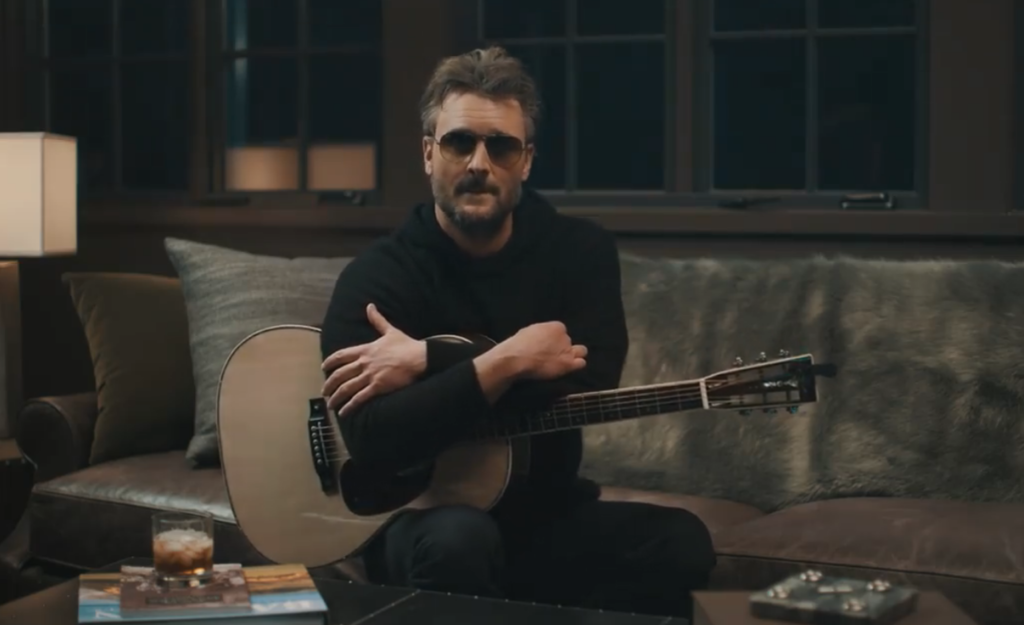
If you’ve followed Church since Chief, you know he guards parts of himself carefully, so it’s a privilege to hear him open up so candidly.
“Something Broke in Me” After Route 91
Church revisited the 2017 Route 91 Harvest Festival shooting in Las Vegas, where he had headlined just two days before the tragedy.
“I had played Friday, and the shooting was on a Sunday. And that following Tuesday, I was playing the Grand Ole Opry […] It was such a, um — something broke in me when that happened.
On stage was always this place that, for all my life, that I could go and whatever was happening in my personal life or anything, I could go on stage. And I had that moment of communion with the fans, and the spirit moves, and we give it to each other back and forth, and that was safe for me. And it never occurred to me that there could be any way for that to not be safe. And after Vegas happened, those bullets shattered that safety, and it — something broke in me […]
Just to see the people on Friday night, and to see how they were so full of life. They were into every song, and I even walked down off the stage and walked all the way out to my sound guy in the middle of the crowd, and I shook everybody’s hand on the last song, and I walked down one side and I came back the other. I don’t normally do that, and I did it that night because it was just the spirit was so great. And then to see what happened right after that, it just, it spun me.”
For an artist whose identity is tied to the stage, the idea that the stage stopped feeling safe explains a lot about the evolution of his tone in recent years. The defiance. The isolation. The introspection.
Vince Gill’s Advice After His Brother’s Death
Church also shared a private moment involving Vince Gill following the death of his brother Brandon.
“When my brother died, I didn’t comprehend that it’s never going to be the same again — with my parents, with their relationship, with the whole family, the family dynamic. When my brother died, I wasn’t prepared for that part.
I had to actually call — and I think it’s okay that I say this to you — but I had a call right after from Vince Gill, and Vince Gill lost iconic country artist — lost his brother. And of all people, like two or three days after my brother died, Vince called me. And I didn’t really know Vince very well. I’d met him.
And he actually was the first one that said to me, he said, ‘You don’t understand this now, but you’re never going to be the same. Your mom and dad are never going to be the same. Your sister’s never going to be the same. Y’all are never going to be the same as a unit. Nothing’s ever going to be the same. And the quicker you understand that, the better you’ll deal with it.’
And at the time, I didn’t get it. I was sitting there thinking, well, it was grief. We’ve always been the family. But looking back on it, that’s, he’s exactly right. It never is the same. When something like that happens, it changes everything. And it becomes a new normal.”
Church admitted he did not fully grasp that advice at the time. Looking back, he says Gill was right. He went on to recall how his brother sacrificed everything early on to help him chase Nashville.
“When I came to Nashville, like any experience for a young artist and Nashville songwriter, it’s tough. You think you’re really good, I would say this to any artist out there: you think you’re really good till you get to Nashville and you see what really good looks like.
And I went through a couple of years of trying to make it and it wasn’t working and I was about to come home one night and I was in a band with my brother, really close to my brother, before I went to Nashville. And I called him and he was back home, he dropped out of school, and he said, ‘What’s going on?’
I said, ‘Man, it’s not gonna work.’ I said, ‘I feel like life’s passing me by. I feel like all my friends and everybody back there is moving on with their life. They’re getting married, they’re doing this stuff. I’m out here treading water,’ right? And the next day he showed up in Nashville.
We drove and I had a one-bedroom apartment. He slept on my foldout couch for a year, just to keep me there. And he just moved in and we found our own rhythm and our own life, but he wouldn’t let me go. He said, ‘No, you’re not. You don’t come here. I’ll come to you.’ And he moved out and it kept me in town.
And a year later, things started to kind of happen, but I don’t tell a lot of people that, but I wouldn’t be here if it wasn’t for him doing that, because that was an ultimate commitment. He dropped everything where he was and said, ‘Pack a bag, I’ll sleep on your couch.’ And that’s what he did.”
The Covenant School Shooting and Fatherhood
Perhaps the most difficult part of the conversation centered on taking his children back to school after the Covenant School shooting in Nashville.
Church described sitting in the parking lot, watching other parents do the same thing, all of them unsure how to process fear and grief at the same time.
“There’s a couple of things you expect in life. You expect to drop your kids off at school and be able to pick them up from school. Like, that’s kind of a given in this country. That’s at least for me, the way I grew up.
And I think the hardest thing I’ve ever done is the day after the Covenant shooting, the people in Nashville decided that it was best for the kids to resume life and go back to school. Taking them to school that morning — and I had taken them to school a thousand times — and watching them walk in that school, I’ve never felt more helpless. I’ve never had more anxiety and fear about that and what that was.
And I remember, I didn’t know what to do. And I pulled over in the parking lot. I kind of felt like I needed to be there. You feel like you — I’m not leaving, I’m gonna sit here all day if I have to, you know? Kind of your garden, the sheep, right? And I pulled in the parking lot, I was lost in my own thoughts and really just going through all this. And I looked to my left and I looked to my right, and there were parents down this entire lineup doing the same thing. They were doing the same thing I was doing. Just sitting there, because nobody knew what to do.
Nobody knew how to encounter the loss and the tragedy of what that was and thinking about sending your kid to school and them being killed by a shooter at school. And it was incredibly helpless. That’s the best word I have, it was helpless. And to this day, that’s the hardest thing I’ve ever done. I’ve never had something like that, emotionally.”
That vulnerability stands out. Church has built a career on strength and conviction. Hearing him speak openly about helplessness hits differently.
Church has always operated a little outside the mainstream machine. This conversation reinforces that he is thinking beyond radio cycles and ticket counts. He is thinking about legacy. About change. About responsibility.
You can watch the full interview on CNN’s platforms, including YouTube and the CNN app.
What do you think about this side of Eric Church? Does hearing him speak this openly change the way you hear his music?